To be submitted by the Cooperating Partner to WFP Area Office within 15 days after end of projects.
PUN-CP/TSS/835/FFA/2018
PROJECT FLA NO.
PROJECT INFORMATION
1.1 Region
1.2 District
1.3 WFP Area-office
1.4 Cooperating Partner
1.5 No. Beneficiaries
1.6 Project Start & End Dates
1.7 Report Submission Date
Bari
Qandala
Bosaso
TSS
460
1 Aug TO 31 Dec 2018
27 Dec 2018
1.8 Project Activity Type(s)
1.9 CP Staff Member Name and Title(person completing this form and certifying accuracy)
1.10 CP Staff Member Contacts
Water catchments
Abdirashid Yusuf /Director
7799317
INTRODUCTION/BACKGROUND
Qandala district is currently undergoing a serious humanitarian situation resulting from a prolonged drought, and poor social services as well the displacement of the local residents. The drought situation has intensified due to the failure of several rainy seasons which has caused severe water shortage and depletion of pasture and this has seriously affected the lives of the pastoral communities and urban poor who directly and indirectly depend on livestock. There is severe water shortage which adversely affected the lives of the poor communities in the district whose main income source is livestock, farms, agro pastoralist livelihoods ) Most effected people whom are women and children with limited/lack of access to food, water, shelter and sanitation. The target villages of Qandala and Buruc have been identified due to extreme water and food shortages due to recurrent droughts. The drought and displacement also caused very high food prices contributing to the deterioration of the food security situation of the vulnerable communities.
PROJECT OBJECTIVES
The overall objective of the project is to improve and increase the availability of the water and satisfy the water needs of the community, livestock and farming in those targeted districts through food for asset/work project while constructing Water Catchments and Fodder production. To meet the increasing demand of water. To reduce the run-off which jokes the drain. To reduce soil erosion. Supplement domestic water needs. Job creation vulnerable HH
4.3. Targeting – Explain how beneficiary households were selected, including criteria used and selection process
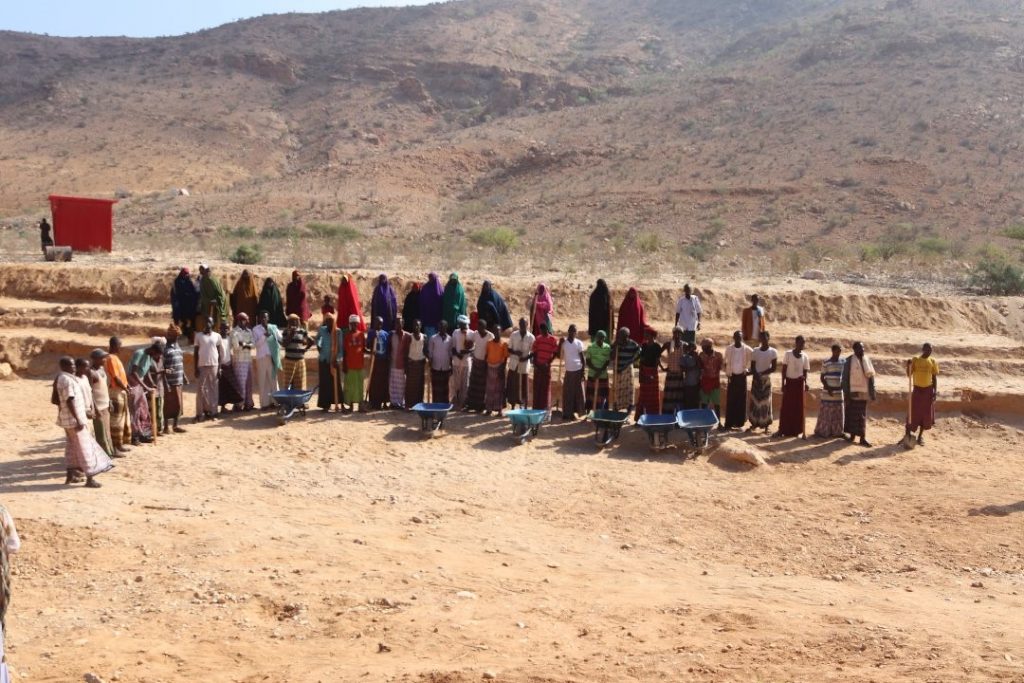
· 460 households receive food voucher for 5 months for participating in the construction of planned projects · Communities obtain safe, reliable grazing land. · Communities obtain safe, potable water for both human & Livestock. · Improve environmental& Soil conservation management. · Safeguard the environment by creating an alternative source of livelihood for drought affected & charcoal burners. · In the targeting process we selected the different types of the community, we gave the percentage of male and female of the beneficiary households and then selected the needy ones yet suitable to perform the job. We have selected from the youth, community leaders, local government workers by male and female.
PROJECT INPUTS
FOOD RECEIPTS AND DISTRIBUTIONS
Commodity
Commodities In
Commodities Out
I. Closing Stock (D-H)
A. Specify
Waybill Number
B. Opening Stock
C. Receipts
D. Total In Stock (B+C)
E. Distributed
F. Return to WFP
G. Losses
H. Total Out (E+F+G)
Cereals
Pulses
Veg Oil
CSB
Salt
Other
Total
NON-FOOD ITEMS (Tools & Materials)
Item
Source (Community, CP, WFP, Other)
Quantity Planned
Quantity Provided
1
Wheel barrow
14 WFP , 26 TSS
40
40
2
Mattocks
141 WFP
141
141
3
Spades
76 WFP, 4 TSS
80
80
4
Bucket
WFP
100
100
5
Corrugated Roofing
TSS
44
44
7
Lumber
TSS
40
40
8
tanker-bar-digging
TSS
20
20
9
Water tank
TSS
8
8
10
Water Tube
TSS
2
2
PROJECT OUTPUTS (Number & Type of Assets Created/Rehabilitated or Persons trained) AND ACTIVITY COMPLETION STATUS.
Activity
Units
Planned
Actual
Percent Total
Excavation – 1st layer
M3
5022
5022
100%
Excavation – 2nd layer
M3
4544
4544
100%
Diverting inlets
M3
1202
1202
100%
Haulage
M2
10767
10767
100%
Embankment – 1st layer
M2
376
376
100%
Embankment – 2nd layer
M2
376
376
100%
Excavation – 3rd layer
M3
13615
13615
100%
Excavation – 4th layer
M3
12180
12180
100%
Haulage
M2
7746
7746
100%
Embankment – 3rd layer
M2
376
376
100%
Embankment – 4th layer
M2
376
376
100%
Bush clearance
M2
67
67
100%
Total
Workdays
PROJECT OUTCOMES
· Improved access to assets and basic services including community and market infrastructure. · The rehabilitation of 2 water catchments completed · 460 Households were assisted with cash/vouchers distributions where each family received $ 90 per month for 5 months. The total value of cash & vouchers distributed was $ 207,000.0] · Reduce water shortage and access water point.
The project addressed the socio-economic problems faced by both men and women. Water shortages affected both genders. Men had to migrate long distances with livestock to reach water. Women had to walk long distances to water sources to collect water for household use, exposing themselves to security risks and increasing their work burden. TSS made all possible efforts to facilitate women participation in the activities where possible. An estimated 40 percent of beneficiaries of monthly household transfers were female and 60 percent male. About 43% of the project management committee at community level were women. TSS encouraged active women participation in discussions and decisions regarding the project and 2 women had been included in the top leadership of the project management committees.
CHALLENGES AND LESSONS LEARNED
The project implementation went very well in terms of food distributions, voucher distributions and progress of planned activities. All expected project deliverables were achieved satisfactorily. However, there were some minor technical challenges which caused some people to miss the food during distributions and be paid at a later stage. These were mainly due to fingerprint issues and no voucher cases, but we received prompt assistance from the technical people in WFP and resolved the issues immediately. As of now, all the people have received their full entitlements. On the other hand, the people were happy to receive cash & voucher transfers more than the in-kind food and requested next projects to be totally cash and vouchers.
CONCLUSIONS AND RECOMMENDATIONS
Thanks to WFP for support vulnerable community, the rehabilitation of water catchments was successfully completed with satisfaction of the participants over the participatory approach and their active involvement in every stage of the planning. Implementation and completion this planning was special for them as they felt owners of the whole process and identified projects which reflected the real needs of the community. Women Groups particularly mentioned that it was first time for them to meaningfully participate in this kind of important community project